Research

Intelligence is
a process.

Digital and physical worlds are the environments. Evolution is the method: interaction creates experience, reinforcement turns feedback into learning, and composition carries learning into new situations.

How machines evolve

One learning loop,
across both worlds.

Our projects differ in scale and embodiment, but share a common mechanism: intelligence must keep changing through its consequences rather than remain fixed after training.

01

Interaction

Generate experience by acting with agents, societies, tools, and the world.

02

Reinforcement Learning

Turn environmental and social feedback into better decisions over time.

03

Self-Evolution

Create new learning signals, curricula, and capabilities from the system’s own experience.

04

Compositional Generalization

Reuse and recombine learned skills to solve situations not seen during training.

01Agents · Societies · Simulation

Digital World

How does intelligence grow through digital interaction?

The digital world gives agents a scalable environment for communication, social interaction, and rapid experimentation. OASIS lets us observe how behavior and intelligence change across populations of up to one million agents.

Systems / PapersOASIS ↗
02Space · Bodies · Action

Physical World

How can intelligence become reliable physical action?

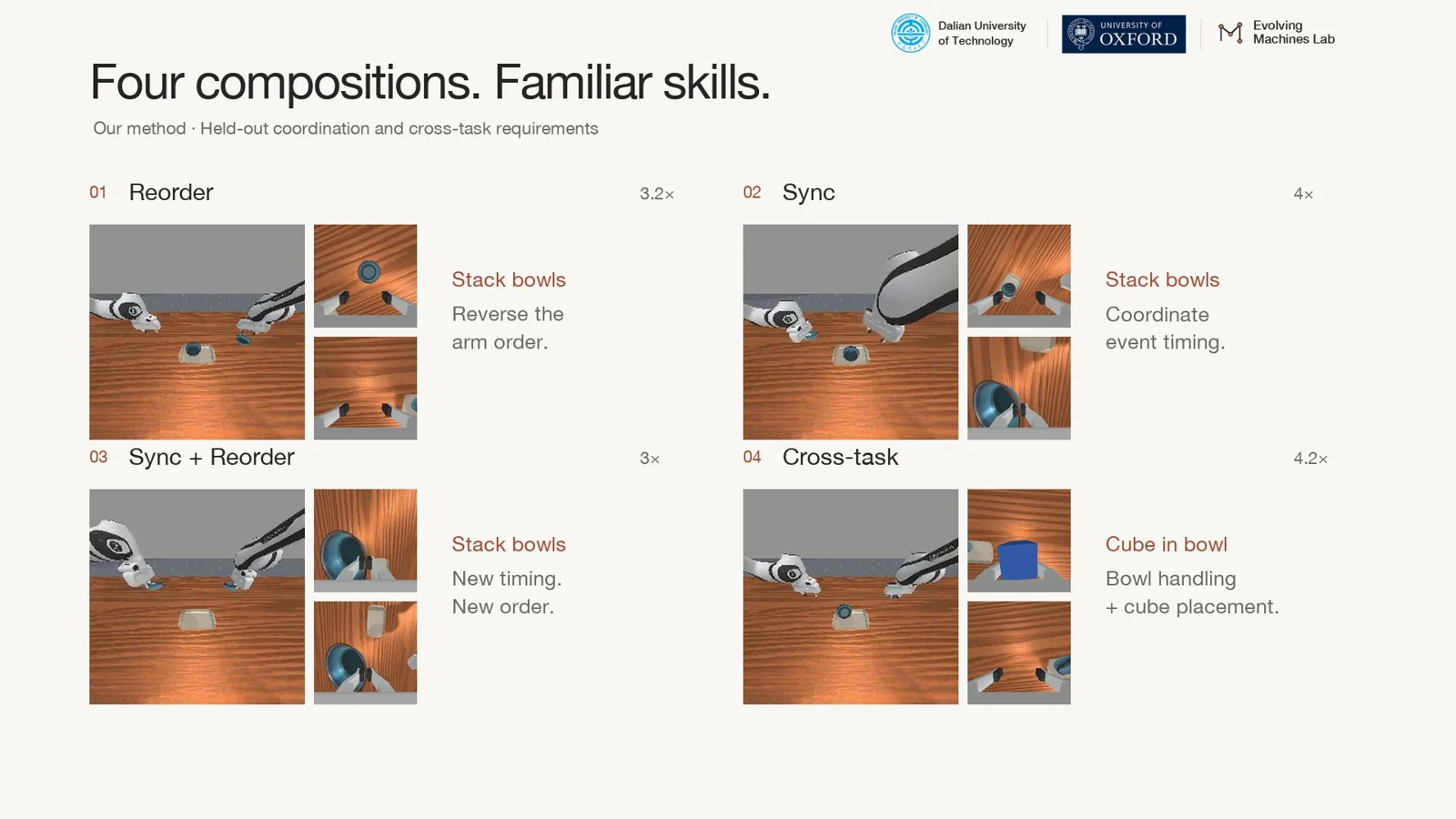
The physical world grounds learning in space, bodies, and consequence. SPAgent connects multimodal reasoning to spatial tools, while Future develops compositional policies, benchmarks, and hardware infrastructure for embodied evolution.

Systems / PapersSPAgent ↗Future ↗

A unifying principle

Evolution is the loop between agent, experience, and world.